Florida Property Tax Update: What the Proposed Homestead Exemption Could Mean for Owners

Florida property taxes are back in the spotlight.
A proposed constitutional amendment headed to voters this fall could significantly expand Florida’s homestead exemption for primary residences. If approved, the proposal would raise the current homestead exemption from $50,000 to $150,000 in 2027 and then to $250,000 in 2028.
For South Florida property owners, the proposal is worth watching closely. Property taxes affect monthly ownership costs, long-term budgeting, resale planning, rental decisions, and how owners think about primary residences versus investment properties.
This update is not tax advice, and the proposal has not been approved by voters yet. But it is a timely reminder for owners to understand their homestead status, review property records, and keep tax documents organized.
Here is what South Florida property owners should know this week.
Proposed Homestead Exemption Expansion Moves Into Focus
Florida voters are expected to decide on a proposed constitutional amendment that would expand the state’s homestead exemption for qualifying primary residences.
According to Kiplinger, the proposal would increase the current $50,000 homestead exemption to $150,000 in 2027 and $250,000 in 2028 if approved. The report also notes that the change would apply to non-school property taxes, meaning school district taxes would not be included in the expanded exemption.
The proposal would require voter approval. In Florida, constitutional amendments generally need 60% voter approval to pass. (Wikipedia)
There are also important eligibility details. Reporting says current Florida residents and those establishing permanent residency by the end of 2026 would be eligible for the full exemption immediately, while future residents would face a waiting period before receiving the full benefit. (Kiplinger)
For homeowners, the proposal could reduce the taxable value of a primary residence for certain property taxes. For local governments, the proposal raises revenue questions because property taxes help fund public services and infrastructure. Kiplinger reported that critics have raised concerns about the potential impact on municipal budgets. (Kiplinger)
The practical takeaway: this proposal is still pending, but homeowners should start by understanding whether their property currently qualifies as a homestead and how their county property appraiser records are listed.

Why South Florida Property Owners Should Pay Attention
South Florida property owners should pay attention because property taxes are not just an annual bill. They are part of the total cost of ownership.
For homeowners, a larger homestead exemption could affect budgeting if the proposal passes. Lower taxable value on eligible primary residences may reduce non-school property tax exposure, depending on the property and local tax rates.
For buyers, property tax expectations can affect affordability. A buyer comparing homes in Miami-Dade, Broward, Palm Beach, or nearby counties may look not only at price, but also at taxes, insurance, HOA or condo fees, and maintenance costs.
For sellers, tax changes can influence buyer conversations. If the proposal becomes law, eligible primary-residence buyers may look more closely at how the exemption applies and when it takes effect.
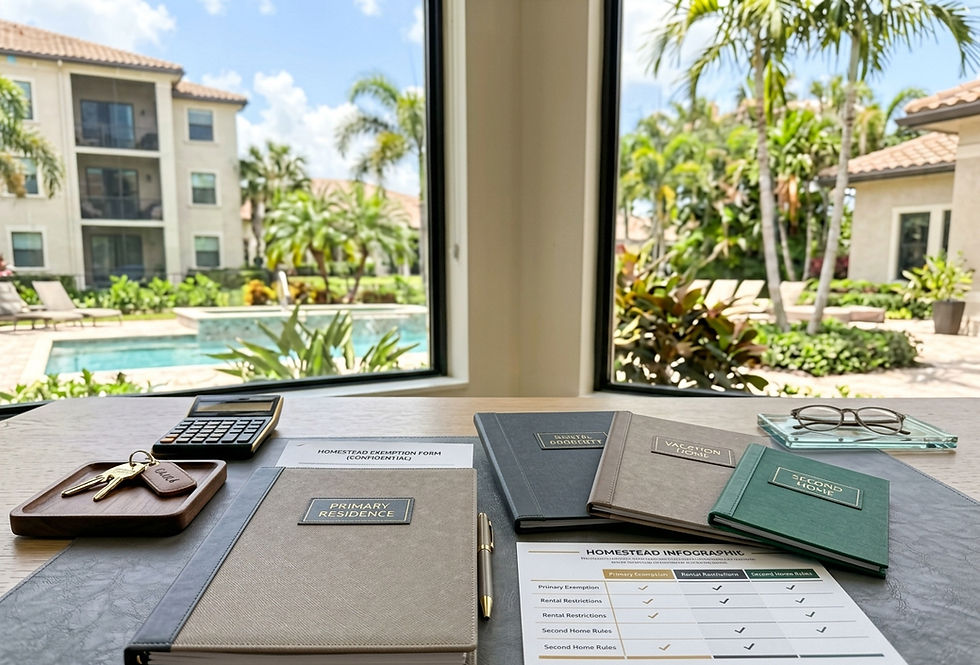
For condo owners, the impact would still depend on ownership status and property use. A homesteaded primary residence is different from a second home, vacation property, or rental unit.
This distinction matters for Templora’s audience because many South Florida owners manage more than one type of property. A primary home, long-term rental, short-term rental, and second home may all have different tax treatment.
The practical takeaway: owners should avoid assuming the proposal applies to every property they own. Homestead rules are tied to primary residence status, so property use matters.

What This Could Mean for Rental and Second-Home Owners
Rental and second-home owners should be especially careful with this topic.
Florida’s homestead exemption is generally connected to a qualifying primary residence, not every property someone owns. That means landlords, Airbnb hosts, short-term rental operators, and second-home owners should not assume the expanded exemption would apply to investment properties or vacation homes.
This does not make the proposal irrelevant to rental owners. It may still affect the broader market.
If primary-residence homeowners receive more property tax relief, that could influence buyer behavior, owner decisions, local government budgets, and housing affordability conversations. It could also create a larger difference between homesteaded properties and non-homesteaded properties.
Owners of rentals or second homes may want to monitor whether the proposal includes any changes that affect non-homestead properties. Axios previously reported that some Florida property-tax proposals discussed a lower cap on annual taxable-value increases for certain non-residential properties, showing that property-tax reform can affect more than one category of owner depending on the final ballot language. (Axios)
The practical takeaway: rental owners should watch the proposal, but they should not market or budget around benefits unless they clearly apply to their property type.
South Miami-Dade Housing Costs Keep Alternative Ownership Models in the Conversation
This week’s property-tax discussion also connects to a larger South Florida issue: ownership costs.
A new manufactured housing community called Cottage Grove is reportedly under construction in South Miami-Dade. The project is planned for 349 four-bedroom, factory-built homes on a 92-acre site, with home prices starting at $129,900, according to reporting from The U.S. Sun. The report also notes that homeowners would lease the land, with a monthly land lease listed at $1,445. (The Sun)
This is not the same issue as the homestead exemption proposal, but it points to the same broader pressure: many South Florida households are looking for more affordable ways to own or live in the region.
For property owners, that matters because housing affordability affects buyer demand, rental demand, tenant expectations, and how different types of housing compete.
Traditional single-family homes, condos, manufactured housing, long-term rentals, and short-term rentals may all serve different needs. Owners should be careful not to assume every housing trend affects every property the same way.
The practical takeaway: South Florida’s ownership-cost conversation is bigger than one tax proposal. Property owners should keep an eye on taxes, insurance, association fees, maintenance, financing, and monthly housing costs together.

What Property Owners Should Review This Week
Confirm whether your property is listed as a homesteaded primary residence, if applicable.
Review your county property appraiser records for mailing address, ownership details, and exemption status.
Keep property tax notices, exemption documents, assessment records, and closing documents organized.
Separate records for primary residences, rentals, short-term rentals, and second homes.
Avoid assuming any proposed tax benefit applies until the measure is approved and eligibility rules are clear.
Monitor local government updates, because property-tax changes can affect services, budgets, and owner planning.
Review total ownership costs, including taxes, insurance, HOA or condo fees, repairs, utilities, and maintenance.
Final Takeaway
This week’s Florida property tax update is worth watching because it could affect how many homeowners think about ownership costs.
The proposed homestead exemption expansion may offer meaningful tax relief for qualifying primary residences if voters approve it. At the same time, it raises questions about eligibility, timing, local government revenue, and how different property types are treated.
For South Florida property owners, the best response is not to make assumptions. It is to stay informed, confirm property records, and keep tax documents organized before decisions need to be made.
Templora helps property owners and hosts stay organized with ready-to-use templates, checklists, and simple rental operation tools designed to make property management easier to handle.



Comments